Most of us tend to drink water when winter comes. Our sweat is not much and we hardly ever feel like we need a drink. The chilly weather makes us desire to drink different things other than plain water. In fact, your body requires water in the winter just as it does in the summer. Your body still needs water in order to function properly so you have to drink water in the winter as well as in the summer.
The thing about dehydration is that it can be a silent condition that you don’t even realize. People don’t usually think about winter hydration. Water is very necessary for the body to stay healthy. Water is a great source of energy and helps the body function properly during the winter season. Winter hydration is crucial as water is vital, to the body.
What Is Hidden Dehydration?
Hidden dehydration is a state where your body is not getting enough water even though you do not feel thirsty.
You can still feel fine and think that everything is okay while your body is actually continuing to get a little dehydrated.
Hidden dehydration might cause your energy levels to drop as well as affecting your digestion, immunity and general health if it continues for quite a period of time.
Your body needs water in order to function properly. Hidden dehydration takes place when you don’t drink enough water.
They may not even realize it, but people often suffer from hidden dehydration in the winter time. It is actually very common. According to experts, most of us do not realize that we are dehydrated until the symptoms of dehydration become apparent. The symptoms of dehydration can be a problem for people with dehydration. One should be aware of the risk of dehydration in the winter as the condition can develop very gradually and won’t be noticed until it is too late.
Remember when sometimes you don’t feel so thirsty during the winter?
It is because the outside temperature is cool and you are not sweating as much as in the summer. Your body doesn’t throw off much water when it’s cold outside.
So you don’t have to drink a lot of water to keep your body hydrated. And that’s why it feels like we have less thirst in winter.
Your body can hold on to water when it is cold.
In the cold season, folks usually have a cup of tea or hot cocoa, which is actually an awesome idea to stay warm. Besides, these beverages naturally have water in them, so you still get some amount of water even if you are not having a lot of plain water.
This makes it possible for your body to stay hydrated and in good condition.
Thirst feels lower in winter because your body saves water and you are drinking water through other drinks.
In the winter time our bodys natural signals that tell us we are thirsty are not as strong. This happens for a reasons:
1. Cold Weather Suppresses Thirst
When it is really cold outside the blood, in our body does not flow to the skin much as it normally does. This can be a problem because our brain gets a little mixed up and thinks that our body has water even when it really does not. The brain thinks that the body is fine so we do not feel like drinking water often. We just do not feel thirsty. That is why we need to remember to drink water when it is cold because our body, the body needs water to stay healthy.
2. When you sweat less it does not mean that your body is losing water. Sweating is one way that your body loses water. The thing is, your body can still lose water even if you are not sweating much. This is something that a lot of people do not know about water loss and sweating. So less sweating does not necessarily mean water loss, from the body.
You do not sweat much when it is winter but your body still loses fluids through:
Breathing (especially dry winter air)
Urination
Physical activity
When you use heating it really dries out the air, inside your home. Indoor heating does this because it takes the moisture out of the air. This is what happens when you have heating.
So when we do not see ourselves sweating our body is still losing water all through the day. Water loss is something that happens to our body every day. It keeps happening even when we are not sweating.
3. Sometimes people like to drink things instead of water. Warm drinks can be really nice. Warm drinks are what people drink when they do not want to drink water.
In the winter, tea and coffee and soups and hot beverages are really nice to have. They make us feel all warm and cozy inside. Tea and coffee and soups and hot beverages can help us drink fluids, which is good.. Sometimes people drink so much tea and coffee and soups and hot beverages that they forget to drink plain water. This is not good because it can make people get dehydrated. Drinking water is important especially, in the winter when we are having a lot of tea and coffee and soups and hot beverages.
Common Symptoms of Winter Dehydration
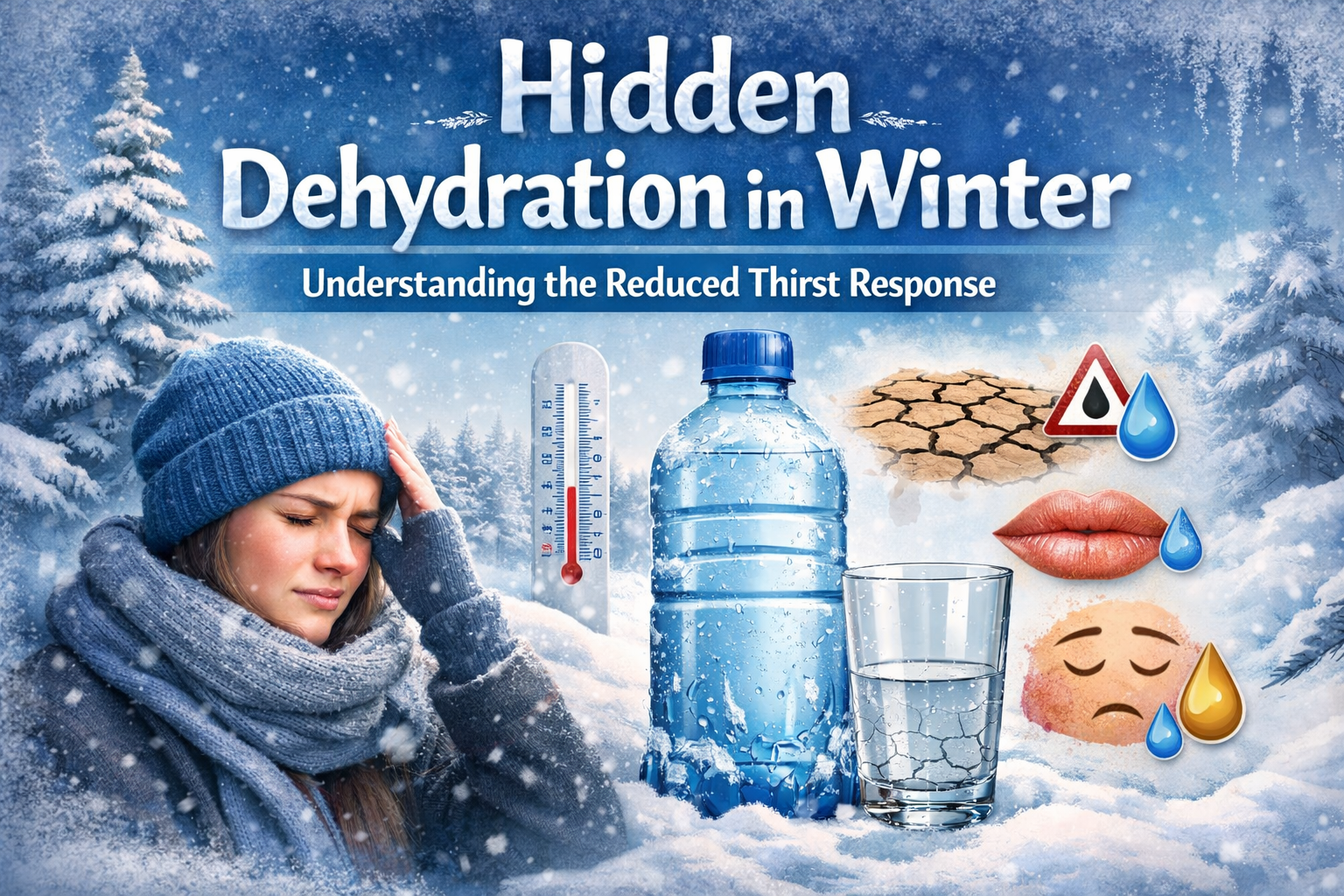
In the winter people do not feel thirsty much. So dehydration can be sneaky. Show up in small ways, such, as:
- Dry skin and chapped lips
- Fatigue or low energy
- Headaches
- Dizziness
- Dark-colored urine
- Dry mouth or throat
- Difficulty concentrating
People usually think that the cold weather or just being tired from the season is the reason, for these symptoms. This means that dehydration is not noticed. Dehydration is a problem that people do not see because they are blaming the cold weather or seasonal tiredness for their symptoms.
Who Is More at Risk?
Some people are more likely to get really thirsty and dehydrated during the winter time including:
Older adults (weaker thirst response)
Children (may forget to drink water)
People living in heated indoor environments
Individuals with chronic illnesses
Travelers and outdoor workers
Health Effects of Dehydration in Winter
Even mild dehydration can cause a lot of problems. Dehydration can lead to a bunch of issues. For example dehydration can cause headaches and dehydration can make you feel really tired. Dehydration can also lead to problems, with your skin and dehydration can make it harder for you to focus.
* Dehydration can cause headaches
* Dehydration can make you feel tired
* Dehydration can cause skin problems
* Dehydration can affect your ability to focus
Weakened immunity
Digestive issues and constipation
Joint stiffness and muscle soreness
Increased risk of kidney problems
Frequent headaches and fatigue
Drinking water helps our body work properly. It helps our blood move around it helps us digest the food we eat. It gives us energy. These things are really important when it is cold outside during winter. Proper hydration is very important, for our circulation, our digestion and our energy levels.
Simple Tips to Stay Hydrated During Winter
1. Drink Water on Schedule
Do not wait until you feel thirsty. Drink water at times every day. Sip water throughout the day to stay healthy. Water is very important, for our bodies so we should drink water regularly throughout the day.
2. Start Your Day With Water
One idea is to drink a glass of water when you wake up. Water replenishes your body after sleeping. A glass of water in the morning is a great way to revitalize your energy and you will feel very much refreshed and ready to go. Moreover, by hydrating, tissues and organs work optimally and hence you feel better and more energized. Having a glass of water in the morning will not only make your day but also the effect is very noticeable on your mood.
3. Add Hydrating Foods
Include water-rich foods such as:
Oranges
Cucumbers
Spinach
Soups and broths
4. Balance Warm Drinks
Enjoy tea or coffee, but don’t replace water completely. Balance warm beverages with plain water.
5. Check Your Urine Color
The color of your urine is a way to tell if you are drinking enough water. If your urine is light yellow that is a sign that you are drinking plenty of water and your body is happy.. If your urine is dark yellow that means your body needs more water. So you should drink some water when you see dark yellow urine. Your urine is, like a signal that tells you if you need to drink water or not. Light yellow urine is what you want to see it means you are well hydrated and your body is working well.
On the closing note
It’s true that winter can lower your desire for water, but the fact is that your body still needs the same amount of water. Dehydration that is not visible at first can gradually change your skin, the level of your energy, digestion, and your immune system if it is not taken care of. Taking water consistently even when you dont feel thirsty is a good way to keep yourself healthy, active, and well, hydrated during the whole winter season.